Phones answered 24/7Flint, MI(855) 974-4733
Free quote (855) 974-4733
Serving Genesee County

Mosquito reduction for Flint and Genesee County yards

Yard-level mosquito reduction built on removing the water they breed in and treating the shaded places where adults rest, across a season that runs late spring to mid-fall.

  • Mice and rats indoors
  • Fall invaders
  • Termite inspections

Get a fast quote

Fastest: call (855) 974-4733. Or send this and we call you back.

Mosquitoes

Mosquito Control: what it covers

Quick answer

Mosquito work starts with water. A technician walks the property for every container, low spot and blocked gutter holding water, removes or treats what cannot be drained, and treats the shaded vegetation where adults rest during the day. The season here runs from late spring to mid-fall.

Mosquito Control illustration for Flint, MI, with a country church and the city skyline in the background

Mosquito control on a single property is a numbers game, not an elimination. Adults travel, so no yard can be made mosquito-free while the surrounding area is producing them. What a yard can do is stop being a breeding site itself and stop offering the cool, shaded, humid places adults rest in through the day, and together those two things make a measurable difference to how usable a garden is.

The breeding half is startlingly small-scale. A saucer under a plant pot, a child's toy, a tarp fold, a corrugated downspout extension, a clogged gutter, a tire, a bird bath, a lid left upturned: any of these can hold water long enough. Walking a property specifically looking for water, rather than for insects, is the most productive hour anyone spends on this problem.

Public health adds a reason to take it seriously here. The Genesee County health department reported a West Nile positive bird in Flushing Township in August 2025, and in 2019 a deer in Fenton Township tested positive for eastern equine encephalitis, with no human cases of that illness reported in the county at the time. Those are the local facts; this page gives no case counts and makes no medical claims.

Service area
Flint & Genesee County
Availability
Phones answered 24/7
Warning signs

Signs you need mosquito control

Keep people and pets off treated vegetation for as long as the product label directs, and ask what that interval is before an application. Do not apply anything to a pond, ditch or rain barrel unless the label specifically covers that use. Empty containers rather than treating them where you can. Cover rain barrels with fine mesh, and follow current health department guidance on personal protection during the season.

  • Biting activity concentrated at dawn and dusk in a shaded part of the yard
  • Water standing for more than a few days in a saucer, bucket, toy or tarp fold
  • Gutters that hold water or show a tide line of silt and debris
  • Larvae wriggling in a rain barrel, bird bath, pond margin or neglected container
  • A low area of lawn or a ditch line that stays wet for a week after rain
  • Mosquitoes resting on the underside of leaves in dense shrubs during the day
  • Corrugated downspout extensions or unused equipment holding water in the ridges
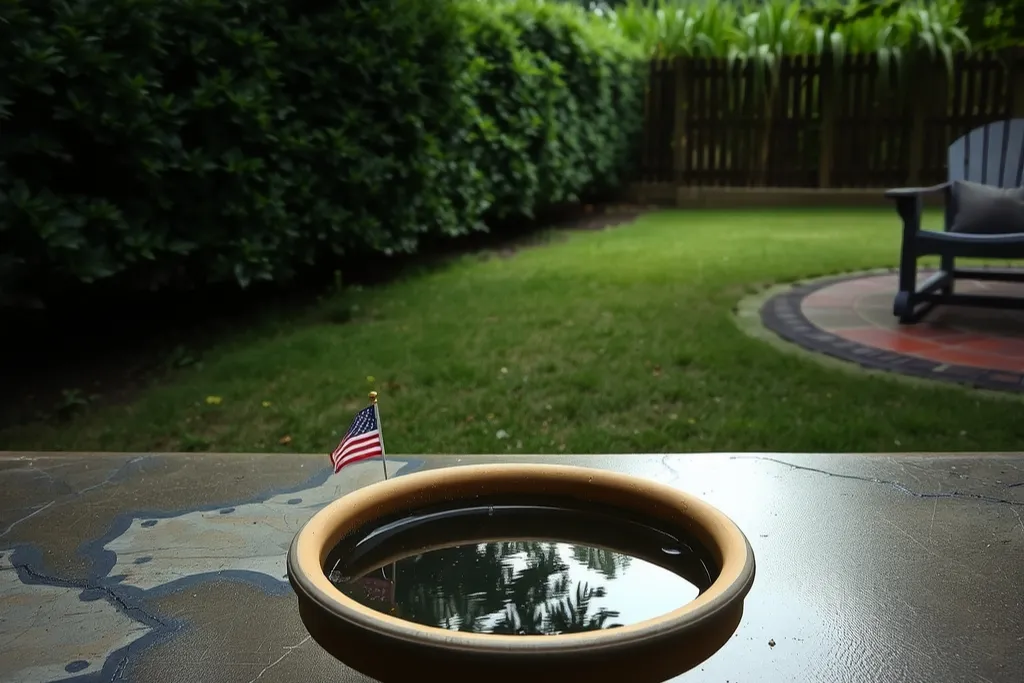
A planter saucer holding rainwater on a patio with a shaded hedge line beyond.
An illustration of the standing water and shaded resting habitat a mosquito visit inventories.Generated illustration of a Michigan house and yard of the kind described on this site. It is not a photograph of a job this company has completed.
Our process

How our mosquito control visit works

  1. Walk the property for water

    Every container, depression, gutter, downspout extension, tarp, planter, tire and piece of unused equipment is checked. Water held for several days can produce adults, so the survey covers small volumes rather than looking only for ponds. The findings are listed by location so the household can keep on top of them.

  2. Remove, drain or treat the sources

    The best answer is to empty or remove a container. Where water has to stay, such as a rain barrel, an ornamental pond or a ditch that cannot be drained, a product intended for larval control is applied according to its label, and the household is told what has gone where.

  3. Find where the adults spend the day

    Adults rest in cool, humid shade: the interior of dense shrubs, the underside of foliage, deep ground cover, behind a shed, under a deck. A technician identifies those zones, since they are where a treatment actually encounters mosquitoes rather than open lawn.

  4. Treat the resting sites, not the open yard

    Where a barrier treatment is used, it goes onto the vegetation and structures where adults rest, applied to the label and kept away from flowering plants where pollinators are active. The price and the plan are explained before anything is applied, including how long the effect realistically lasts.

  5. Repeat through the season and adjust

    Because adults keep arriving and rain keeps refilling containers, this is a seasonal program rather than a single visit. Each return visit re-walks the water sources, re-treats the resting zones where needed, and notes what has changed since the last one.

Job stories

Typical jobs for mosquito control

Typical job
Illustration: Typical visit: standing water around a river-side yard in Flushing

Typical visit: standing water around a river-side yard in Flushing

What homeowners notice
A family cannot sit outside at dusk in late summer. The yard slopes toward the river and has a tarp over a woodpile, a blocked gutter run and two planter saucers that have not been emptied in weeks.
What we do
The technician inventories every container and low spot holding water, tips what can be tipped, notes the gutter as a clearance job, and treats the shaded resting places along a hedge line and under a deck by label, explaining how long to keep children and pets off.
What to expect
The household gets the water inventory in writing, with a weekly walk to repeat it, and a plan of timed visits across the rest of the season rather than a single application.

depends on the yard size and the water inventory typical visit

Why source reduction outperforms spraying

A treated yard still receives adults from everywhere around it, so a spray reduces what is present rather than what is produced. Removing the water on your own property reduces production, and production is the only part of the cycle a household actually controls.

The arithmetic is simple enough to be convincing. A single neglected container can produce a steady succession of adults within a few feet of a back door for the whole season. Emptying it costs nothing and removes that production permanently, while a treatment has to be repeated and never reaches the container at all.

This also sets a realistic expectation of what treatment does. Used alongside source reduction it lowers the numbers resting in a garden and makes an evening outdoors tolerable. Used on its own, in a yard with four water-holding containers and clogged gutters, it is a recurring cost with a disappointing result.

The water people miss

Gutters, corrugated downspout extensions, tarp folds, plant pot saucers, upturned lids, old tires, wheelbarrows and boat covers. None of them look like habitat, and all of them hold water for the days a mosquito needs.

Gutters deserve special mention here, because a blocked gutter is both out of sight and capable of holding water the entire season. A property with mature trees should expect to clear them at least twice a year, and a gutter showing a tide line of silt is already a confirmed source.

The practical habit that works is a weekly circuit after rain: tip everything that holds water, change the bird bath, check the saucers, look into the rain barrel. Ten minutes a week does more for a garden than most of what can be bought, and a technician will usually say exactly that.

The season, and what the county has reported

Mosquito season here runs from late spring to mid-fall. The Genesee County health department reported a West Nile positive bird in Flushing Township in August 2025, and a deer in Fenton Township tested positive for eastern equine encephalitis in 2019, with no human EEE cases reported in the county at that time.

Those reports are surveillance findings and are quoted here as published, without case counts and without any claim about risk to a particular household. What they do justify is treating mosquito reduction as worth doing rather than as a comfort measure, and following whatever guidance the health department issues in a given season.

The seasonal shape is the useful planning information. Work started in late spring, before populations build, is far more effective than work started in August, because the containers are emptied before they have produced anything. By mid-fall the season closes itself.

Treating responsibly around a garden

Applications are made to resting vegetation and structures according to the label, kept off flowering plants where pollinators are active, and kept away from water bodies except where a product is specifically intended for them. Vegetable gardens are treated as off limits unless a label allows it.

The label is the governing document for all of this, and it is reasonable to ask to see it. It sets where a product can go, at what rate, how close to water, and what re-entry interval applies for people and pets. A technician should be able to tell you that interval before an application rather than after.

Applicators and businesses applying pesticides for pay in Michigan are certified and licensed by the Michigan Department of Agriculture and Rural Development, MDARD, and you may ask the technician to confirm their certification. For yard work around food plants and pollinators, that is a question worth asking.

Options

Types and options for mosquito control

A residential yard program

The standard arrangement: source reduction plus repeated treatment of resting zones through the season. Properties with mature planting and heavy shade need more attention than open ones, because the shade is what holds the adults during the day.

A one-off treatment before an event

A single application a day or two ahead of an outdoor gathering, aimed at reducing activity for a short window. It is honest to say this is temporary; it reduces numbers for a period rather than clearing a yard.

A property with a pond, ditch or wet low ground

Where standing water is permanent or cannot be drained, the work shifts toward larval control in those bodies of water and toward treating the vegetation around them. This needs careful product selection and strict adherence to the label near water.

A commercial or multi-unit property

Apartment grounds, a restaurant patio or an outdoor service area, where the water sources are often shared and nobody specific is responsible for them. The practical work is as much about who empties what as it is about treatment.

Genesee County

Why mosquito control is different in Mid-Michigan

Coverage runs across the city and out to Flushing, Swartz Creek, Davison, Grand Blanc, Mount Morris and the rural townships. Properties near the watercourses that run through the area, including the river through Flint and Flushing and the creek on the county's west side, tend to have wetter low ground and more shaded margins, both of which matter more than lot size does.

Heavy rain is the local driver of a sudden bad stretch. Rainfall events in Genesee County have flooded yards and low ground, and the weeks afterwards are when containers, ditch lines and depressions that are normally dry are all holding water at once. A circuit of the property after a storm is the single most useful response.

Need mosquito control today?

Call any hour and explain what is going on. You get a clear price before any work starts.

Related

Tick Control

Work aimed at the boundary between mown lawn and brush, where ticks actually live, on properties at the rural edges of the county.

General Pest Control

The starting visit when something is in the house and nobody has identified it yet: an inspection of the structure, then a plan sized to what is actually there.

Commercial Pest Control

An ongoing, documented program for premises where the problem is continuous: deliveries, waste, public access and shared structure, rather than a single household.

Guides

Read before you book

FAQ

Mosquito Control FAQs

Can my yard be made mosquito-free?

No, and nobody should promise it. Adults fly in from the surrounding area. What a program does is stop your property producing them and reduce the numbers resting in it, which is what makes a garden usable.

How little water does it take?

Very little. A plant pot saucer, a bottle cap's worth in a tarp fold, or the ridges of a corrugated downspout extension can be enough if the water sits for several days.

How long does a treatment last?

A limited period, which is why programs are seasonal and repeated. Rain, heat and plant growth all shorten it. A technician should tell you the realistic interval rather than imply a single visit covers the summer.

Is it safe around my vegetable garden?

Only where the product label permits that use, and in most cases food plants are avoided. Ask what is being applied, where it is going and what re-entry interval applies before the work starts.

When should I start?

Late spring, before populations build. The season here runs from late spring to mid-fall, and early source reduction prevents production rather than reacting to it.

What about West Nile virus here?

The Genesee County health department reported a West Nile positive bird in Flushing Township in August 2025. This page gives no case counts and no medical advice; the health department is the right source for current guidance. The guide on mosquito season and West Nile in Genesee County collects what has been reported.

Will treating help with ticks too?

Not directly; ticks live in different places and need a different approach. Tick control covers that, and it is mostly about yard edges rather than resting vegetation. Late spring is the time to arrange this, and (855) 974-4733 takes the call.

WhatsApp