Phones answered 24/7Flint, MI(855) 974-4733
Free quote (855) 974-4733
Serving Genesee County

Basement and crawl space pests in Flint houses

Work at the lowest level of the house, where damp, dark and undisturbed conditions collect the insects and rodents that the rest of the building never sees.

  • Mice and rats indoors
  • Fall invaders
  • Termite inspections

Get a fast quote

Fastest: call (855) 974-4733. Or send this and we call you back.

Basement Pests

Basement and Crawl Space Pests: what it covers

Quick answer

A basement or crawl space problem is usually a moisture problem with insects attached. A technician traces where water enters and lingers, identifies what has moved in because of it, treats along the structural lines those pests use, and lists the openings at grade worth closing. Flint Pest Control does this throughout Flint and Genesee County.

Basement and Crawl Space Pests illustration for Flint, MI, with a river bridge and a country church in the background

The lowest level of a house is a different environment from the rest of it. It is cooler, darker, damper and largely undisturbed, and those four conditions are precisely what a great many insects are looking for. Crickets, ground beetles, pillbugs, centipedes, spiders and ants all turn up there in numbers that would be remarkable upstairs, and mice treat the same space as a quiet place to live.

That is why this service is organized around the space rather than the species. A technician dealing with one basement is dealing with the same handful of causes each time: water getting in at or below grade, organic material sitting on a concrete floor, a gap at the sill line, and a corner nobody has moved anything in for years. Identify those and most of the insect list sorts itself out.

Heavy rain is the local accelerant. Rainfall in Genesee County has flooded basements and yards more than once, and the aftermath is predictable: a floor that stayed wet for days, cardboard that absorbed it, and a sudden population of damp-loving insects a month later. A basement that has taken water is a different inspection from one that has not, and it is worth saying so when you call.

Service area
Flint & Genesee County
Availability
Phones answered 24/7
Warning signs

Signs you need basement and crawl space pests

Do not enter a basement with standing water until the power to that level is confirmed off at the panel by someone competent to do it, and never stand in water near an outlet, a pump or a panel. Crawl spaces carry their own risks, including low clearance, nails, disturbed insulation and poor air, so leave an unlit or tight space to someone equipped for it. Wear gloves and a mask when handling wet cardboard or nesting material.

  • Crickets, ground beetles or pillbugs appearing along the base of a basement wall
  • Centipedes or spiders in numbers in a utility corner or behind stored boxes
  • Ants trailing along a basement wall, a pipe or the underside of the floor above
  • Cardboard boxes that are soft, stained or crumbling where they meet the floor
  • A persistent earthy or musty smell that does not clear when the space is aired
  • Condensation on cold water pipes, or a damp ring on the floor around a column
  • Droppings or shredded nesting material among stored items or along a floor joist
  • Standing water or silt marks near a floor drain, a sump or a window well
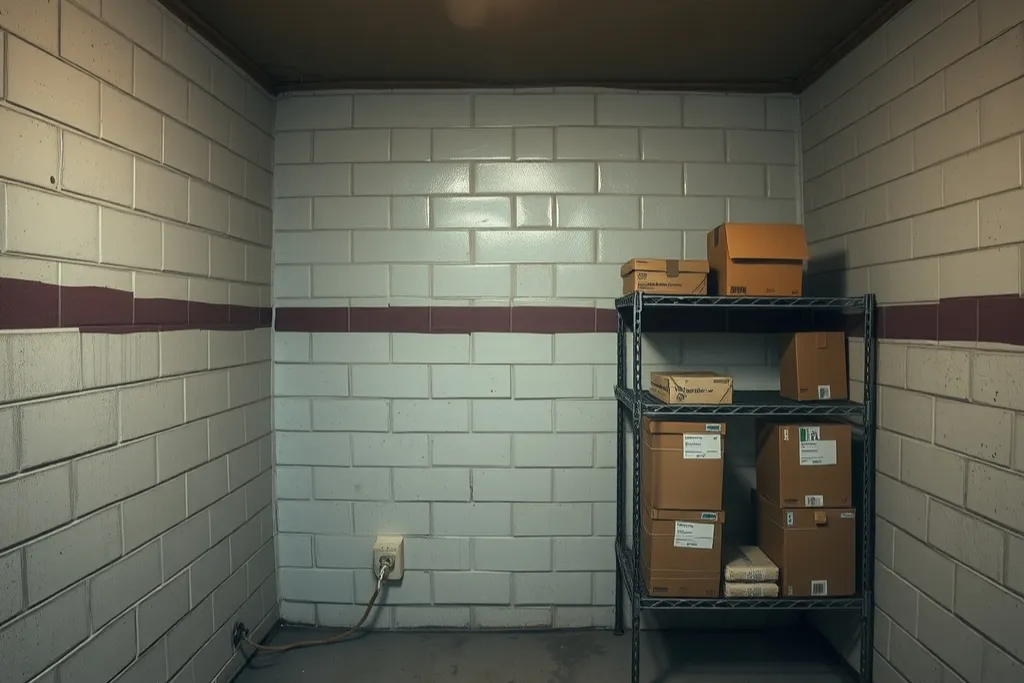
An older basement corner with a water stain line on a block wall and boxes on shelving.
An illustration of a basement after water, with storage lifted off the floor.Generated illustration of a Michigan house and yard of the kind described on this site. It is not a photograph of a job this company has completed.
Our process

How our basement and crawl space pests visit works

  1. Find the water before the insect

    The inspection starts with sources: downspout discharge next to the wall, grading that falls toward the house, a window well holding water, a floor drain that backs up, a sump that has stopped working, condensation on cold lines. Each is a reason for the insect population, and the list is written down for you with the easy fixes marked.

  2. Read the perimeter and the stored material

    Then the space itself: the junction of floor and wall all the way round, behind and under anything stored, the sill line, and the void above the foundation wall. Cardboard and soft goods on a concrete floor are both food and harborage for several of these insects, so what is stored and how it sits matters.

  3. Check a crawl space properly where access allows

    A crawl space is inspected for ground moisture, the condition of any vapor barrier, open vents, and insulation that has fallen or been nested in. Access is sometimes limited and a technician will say when a space is not safely enterable rather than guessing at what is in it.

  4. Treat along the lines that are actually used

    Treatment goes where these insects travel: the floor and wall junction, behind and beneath stored items, around penetrations and into voids. Products are applied according to the label, in the lowest level of the house rather than through living space, and the plan is explained with its price before anything is applied.

Job stories

Typical jobs for basement and crawl space pests

Typical job
Illustration: Typical call: crickets along a basement wall after heavy rain in Genesee Township

Typical call: crickets along a basement wall after heavy rain in Genesee Township

What homeowners notice
A week after a storm put water across the yard, insects are collecting along the basement wall-floor joint and under the bottom step. Cardboard boxes stacked against the outside wall wicked water and are still damp.
What we do
The technician traces the stain line to a crack below grade and a window well full of silt, lists both, recommends losing the soaked cardboard and shelving the rest, and treats the harborage along the joint by label once a dehumidifier has been running.
What to expect
The report separates the pest findings from the water findings, names the downspout and grading faults for a drainage trade, and says what should be re-checked once the basement has dried.

depends on access and how much stored material must be moved typical visit

Why nearly everything down there is about humidity

Crickets, pillbugs, centipedes, ground beetles and springtails all need damp conditions and die out in dry ones. A basement held consistently drier stops supporting them without a single application, which is why a dehumidifier is sometimes a better purchase than a treatment.

A centipede is a predator, so a number of them means there is something for them to eat, which in turn means a damp population underneath. That makes them useful as an indicator rather than the problem itself. Treating the centipedes while leaving the dampness produces the same situation again in a few weeks.

The sequence that works is dry it, clear it, then treat the perimeter. Each step makes the next one smaller. A basement that has been dried and cleared often needs only a light perimeter treatment, where the same basement untouched would need repeated visits and still look the same by spring.

What heavy rain leaves behind

After a serious rain the problem is not the water but what stayed wet. Cardboard, carpet, insulation and stored paper hold moisture for weeks, and that reservoir supports insects long after the floor itself looks dry.

Genesee County has seen this more than once. The overnight rain of July 2012 brought at least 5.25 inches and was called a 100-year event by the Genesee County Drain Commissioner, with Swartz Creek nearing record levels and both I-75 and I-69 closed. On 10 July 2024 heavy rain again flooded roads, basements and yards across the county, including Genesee Township.

After either kind of event, the useful work is removal rather than treatment: wet cardboard and soaked soft goods out, the floor dried, air moving. Mice, ants and crickets all press indoors when the ground outside is saturated, so the weeks after a flood are when a basement is most likely to acquire a population it keeps.

The sill line is the gateway

In most houses here the floor frame rests on a block or poured wall, leaving a cavity that runs the entire perimeter. It is rarely sealed in an older building, and it connects the outside world directly to every wall on the ground floor.

Insects and mice both use it, which is why one survey serves both. Closing that line with mesh, masonry patch and sealant, in that order of load-bearing, removes the route rather than intercepting traffic on it. Window wells and penetrations are part of the same line of work.

There is a payoff beyond pests. The same gaps carry cold air and moisture, so the work usually makes the lower level more comfortable and easier to keep dry. Where the openings are extensive, the list is staged so the items that matter most get done first. Dedicated sealing work is covered under mouse exclusion and sealing.

What belongs on a basement floor

As little as possible, and nothing absorbent. Plastic bins on steel shelving, a clear strip of floor against every wall, and no cardboard touching concrete will change a basement's insect population more than most treatments will.

The reason is mechanical. Cardboard on concrete wicks moisture from the slab, stays damp underneath, and becomes both shelter and food. Lifting storage a few inches and switching to sealed bins removes that microclimate entirely, and it has the side benefit of making an inspection possible in the first place.

A clear perimeter strip matters just as much. A technician cannot read a wall base that is stacked to the ceiling, and neither can a homeowner. The households that stay clear of repeat basement problems are generally the ones that can see their own foundation walls.

When what you have is structural

Some findings in a damp lower level are not insect problems at all. Soft sill wood, a crumbling mortar joint or a joist end that gives under a probe are repair items, and they are reported as such rather than treated.

Moisture-damaged wood is also what carpenter ants and subterranean termites look for, so a report of soft wood changes which inspections make sense next. A technician finding it will say which of those possibilities the evidence actually supports, instead of implying the worse one.

Being told that a problem is a builder's job rather than a treatment is a legitimate outcome of a visit. Sealing over soft wood looks finished and is not, and treating insects that are there because the wood is wet simply schedules the same visit again. See also carpenter ant control and termite inspection and treatment.

Options

Types and options for basement and crawl space pests

A basement that floods or takes water

The insect work here is secondary to the water. Until the source is addressed, treatments get undone every time it rains hard. The report concentrates on the drainage items and on what to remove from the floor, with treatment as the holding measure in between.

A dry basement with heavy stored material

No water problem, but boxes, paper, fabric and soft goods stacked on the slab for years. This is a harborage job: thin the material, get what stays up onto shelving, treat the cleared perimeter, and the population usually falls away without much else.

An unconditioned crawl space on soil

Ground moisture evaporates into the structure continuously, keeping the wood above it damp. Here the fix is physical, with the vapor barrier, the vents and any standing water handled before insect work is worth doing. Carpenter ants and termites both find this kind of space inviting.

A finished lower level

Framed walls and flooring over concrete hide both the water and the insects. Signs show at the baseboard, behind a wall at a known penetration, or as a smell. The inspection is more careful and the technician will tell you honestly when a reliable answer needs something opened up.

Genesee County

Why basement and crawl space pests is different in Mid-Michigan

Lower-level conditions vary by part of the county in ways that affect the work. Older city neighborhoods and Flint Township are mostly full basements on block walls with at-grade windows. Rural townships such as Atlas, Goodrich, Gaines and Otisville bring more crawl spaces on soil, where ground moisture rather than drainage is the main driver. Swartz Creek and Flushing sit near watercourses that have run high in past storms.

Season sets the mix. Spring brings the wettest floors and the ants that follow them, summer brings crickets and the ground insects that come in during dry spells, and the first cold nights of fall move mice into the same space. A visit timed just before the fall change does double duty, since the sealing that keeps insects out is the sealing that keeps mice out.

One call and it gets handled.

Tell us when you need someone and we book the earliest visit a basement and crawl space pests technician has, and you approve the price before any work starts.

Related

Mouse Trapping and Monitoring

Removing the mice that are in the building now, with placement based on where they actually travel and return visits that confirm the activity has stopped.

Ant Control

Following a trail back to a colony instead of wiping it off the counter, then baiting or treating in a way that reaches the nest and the queen.

General Pest Control

The starting visit when something is in the house and nobody has identified it yet: an inspection of the structure, then a plan sized to what is actually there.

Guides

Read before you book

FAQ

Basement and Crawl Space Pests FAQs

Why do I get crickets in the basement every summer?

Because the space stays damp and dark and there is something for them to shelter under. Drying the area, clearing material off the floor and closing the sill line usually ends the annual pattern more reliably than treatment alone.

Will a dehumidifier really help?

For the damp-loving insects, yes, often markedly. Several of them cannot survive in a consistently drier space. It is not a substitute for fixing water coming in, but it changes the conditions that let a population build.

My basement flooded. What should I do first?

Get wet absorbent material out, dry the floor and keep air moving. Wet cardboard, carpet and soaked insulation hold moisture for weeks and are what the insects respond to, so removal does more early on than treatment does.

Can you treat a crawl space I cannot get into?

Only if access is safe. Where it is not, a technician will say so rather than guess. In many cases the useful work is at the vents, the ground cover and the perimeter, all of which are reachable from outside.

Are centipedes a sign of something worse?

They are a sign of a damp population they are feeding on. Finding several is a reason to look for the moisture rather than a reason to worry about the centipedes themselves.

Does the sealing work count as part of this?

The survey and the list do. Extensive closure work is scheduled as its own task because it takes time and materials, and the list is written so it can be staged. The guide on wet basements and pests after heavy rain covers the aftermath of a storm. Mention it on (855) 974-4733 if your lower level has taken water recently.

WhatsApp